








Are you prepared for the most significant change in finance since the introduction of Excel spreadsheets? Will your team be spearheading the transformation or lagging? Finance leaders should be asking themselves these questions, as the facts are clear: AI is not a future possibility for finance; it is already a present reality.
2026 will be a milestone. With financial services firms expected to increase their AI spending to $97 billion by 2027, their investment in artificial intelligence is projected to more than double from 2023 levels. This is not another technological fad. We are discussing a fundamental shift in the financial industry. Successful leaders will not be those with the most advanced technological instruments; they will possess the most relevant abilities, attitudes, and foresight.
Why 2025 has been Different for Finance Leaders
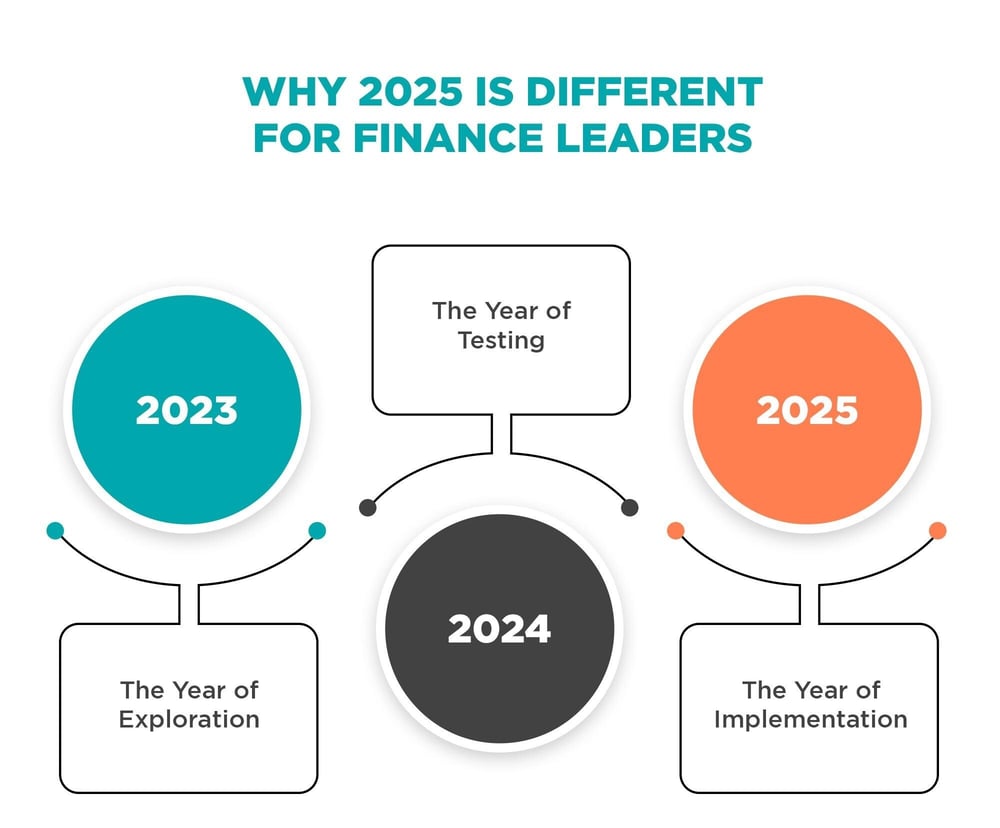
The year 2023 brought wonder, followed by 2024, which allowed for testing, and 2025 has been the year of accurate AI implementation. 2026 will bring more of advancements.
According to the latest statistics, Among other top strategies, 25% of respondents plan to leverage AI-driven insights to guide better decisions and 18% expect to invest in dedicated risk management teams. Less time is spent on data collection and constructing models. There is a transition toward more innovative, value-added roles.
Consider the possibilities. What if your team spent zero time on data collection? What if forecasting happened automatically with up-to-the-minute data? This is no longer a dream; it is a reality.
Every Finance Leader Needs AI Skills
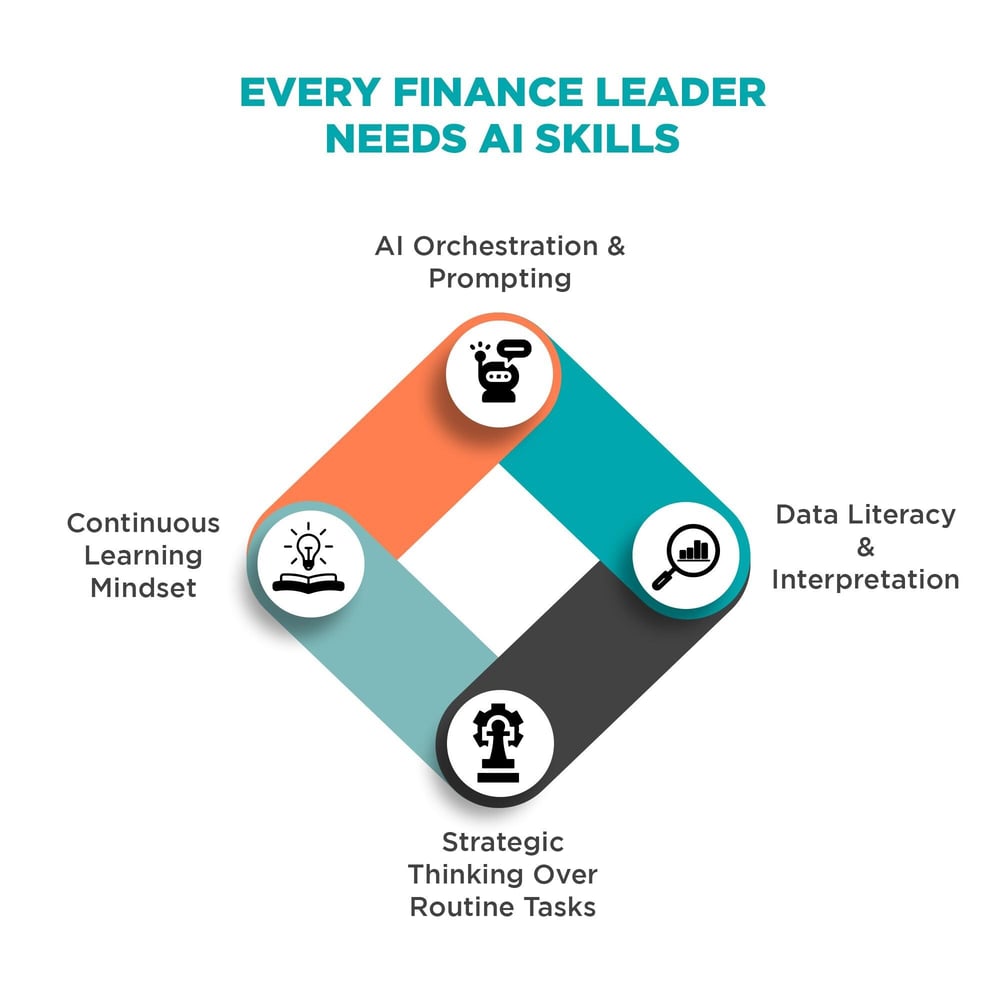
What exactly should you focus your learning on? We can simplify it into a few practical and reasonable segments.
1. AI Orchestration and Prompting
You are not expected to become a coder. Nevertheless, you need to know how to use different AI tools effectively. AI orchestration involves strategic prompting of the AI, understanding how specific AI tools can solve specific problems, and recognizing when AI can facilitate or optimize a task you are working on.
You should focus on basic tasks first. Learn the best way to pose a question to your AI tools. Refine prompts to yield higher-value outputs. This one ability will put you ahead of the curve.
2. Data Literacy and Interpretation
Artificial Intelligence (AI) is dependent on data visualization. However, without context, data is simply noise. In 2026, the most sought-after AI skills in Financial Leadership will revolve around interpreting AI insights to unlock value within the business. Understanding data lineage, data quality, and the ability to transform data and metrics into strategic recommendations is invaluable.
The shift is now towards the understanding of data and the tools of AI in the new age. More importantly, knowledge about data complexity and strategic data, distilled into a vision statement, is invaluable.
3. Strategic Thinking Over Routine Tasks
AI is the new partner in most finance functions. Routine tasks, such as transaction processing, are automated, freeing time for strategic advising. Balancing sheets may be automated; however, the business function for the strategic plan will still be the responsibility of the appointed person.
As a person, ask tasks such as: what are the most vital functions of the business that a machine can assist with but is limited in automating, and which are essential decisions. This requires learning to articulate diverse business vernaculars. It requires enough technological understanding to bridge the finance gap with the technology counterparts.
4. Continuous Learning Mindset
The most essential skill is actually non-technical. It is the willingness to learn, shift, and adopt new things. The decisive factor that differentiates thriving leaders from stagnant ones is a growth mindset.
The AI milieu is bound to change. The tools change, best practices shift, and your devoted zeal towards learning the craft is what carves your relevance.
Practical Steps to Build Your AI Readiness
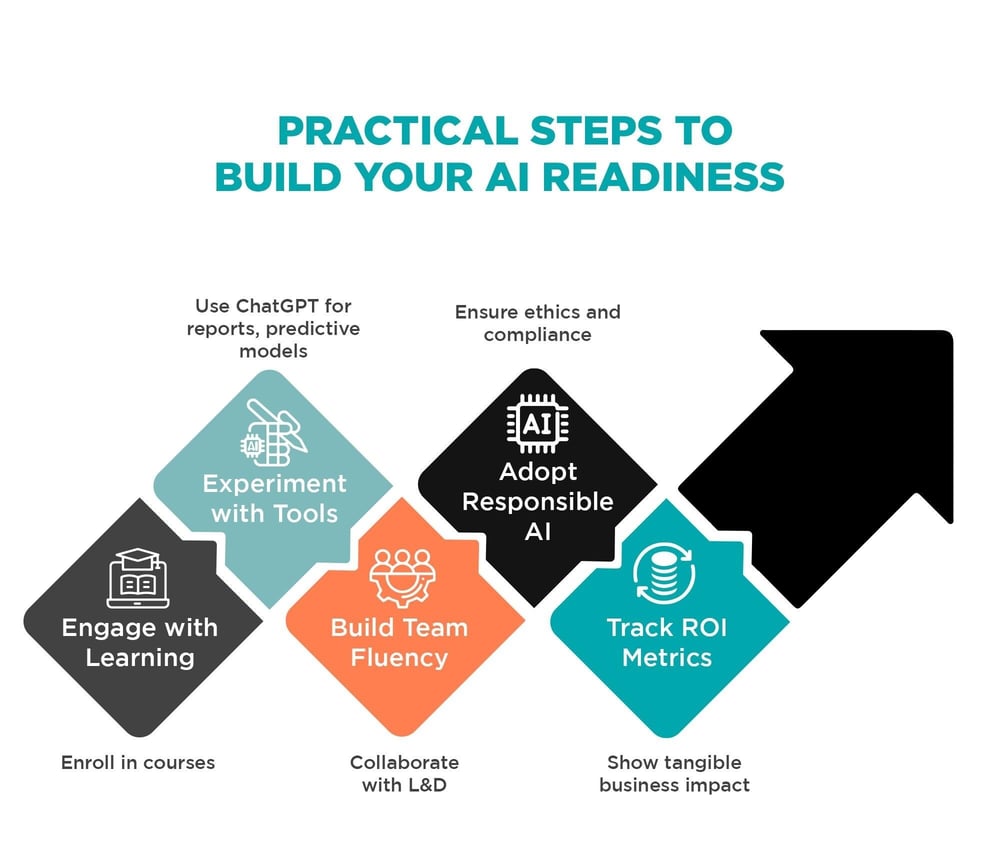
Information without application is nothing more than theory. Here is how to actually engage with the AI finance leadership skills:
Engage with planned learning - MIT AI and ML courses and Cornell's AI Strategy Certificate are designed with finance leaders in mind. Even 15 minutes a day will add to your knowledge.
Dive into AI instruments - Read about AI, then actualize it. Use ChatGPT to summarize reports, explore predictive analytics, and automate financial analysis. Practical knowledge trumps theory every time.
Develop AI fluency within your teams - Collaborate with your Learning and Development teams in building a finance-specific skills development roadmap. In the world’s top organizations, Learning and Development is Silos embedded within the finance function and is a core focus.
Prioritize Responsible AI - Adopt an AI with responsible AI adoption, compliance, and the protection of the customer with balanced innovation. Understand bias with algorithms and your regulations.
Track Important Metrics - The era of being able to invest in AI without a reason is over. Your board wants to see returns. AI should be an investment that can show returns in efficiency, cost savings, and improved decision-making. Don’t forget to use the information and revise your approach.
Conclusion: Your Journey Starts Now
There is no longer a choice about adopting AI in the finance sector. It's a reality that is taking hold regardless of personal preparedness. However, the optimism in this fact lies in the freedom to construct your own narrative when adopting AI. Will you shape the narrative or observe from the perimeter?
The AI competencies you acquire in 2026 will influence your career within the next ten years. Data literacy, AI tool orchestration, strategic planning, and adaptive learning will define the pillars of finance leadership. Today's investments in these competencies will transform position holders into tomorrow's innovators.
Where do you envision yourself in five years? Amongst AI-adaptive finance leaders, or amongst the finance leaders who regrettably wished they had started their AI journey sooner? Your decision will set the pace of your action.
Whether you’re just beginning to adopt AI or looking to expand what you’re already doing, we’re ready to support you. AI is the future of finance, so don’t be hesitant. Go to www.discoverdollar.com and see how our tools and industry experts can help you adopt advanced practices that will prepare you to lead in AI-enabled finance.