









Accounts payable is an essential functional area of finance, yet most organizations handle it manually. It appears to be an inexpensive, low-tech approach, but it often hides substantial operational and financial drag.
Manual processing of accounts payable leads to cash flow management errors. It also introduces mistakes and wastes resources that the finance team could use for important work.
Understanding the actual costs of manual account payable processing is vital for finance leaders. If the hidden costs are uncovered and quantified, it becomes apparent why companies are systematically moving towards automation.
Manual Accounts Payable isn't Free - It's Unknown
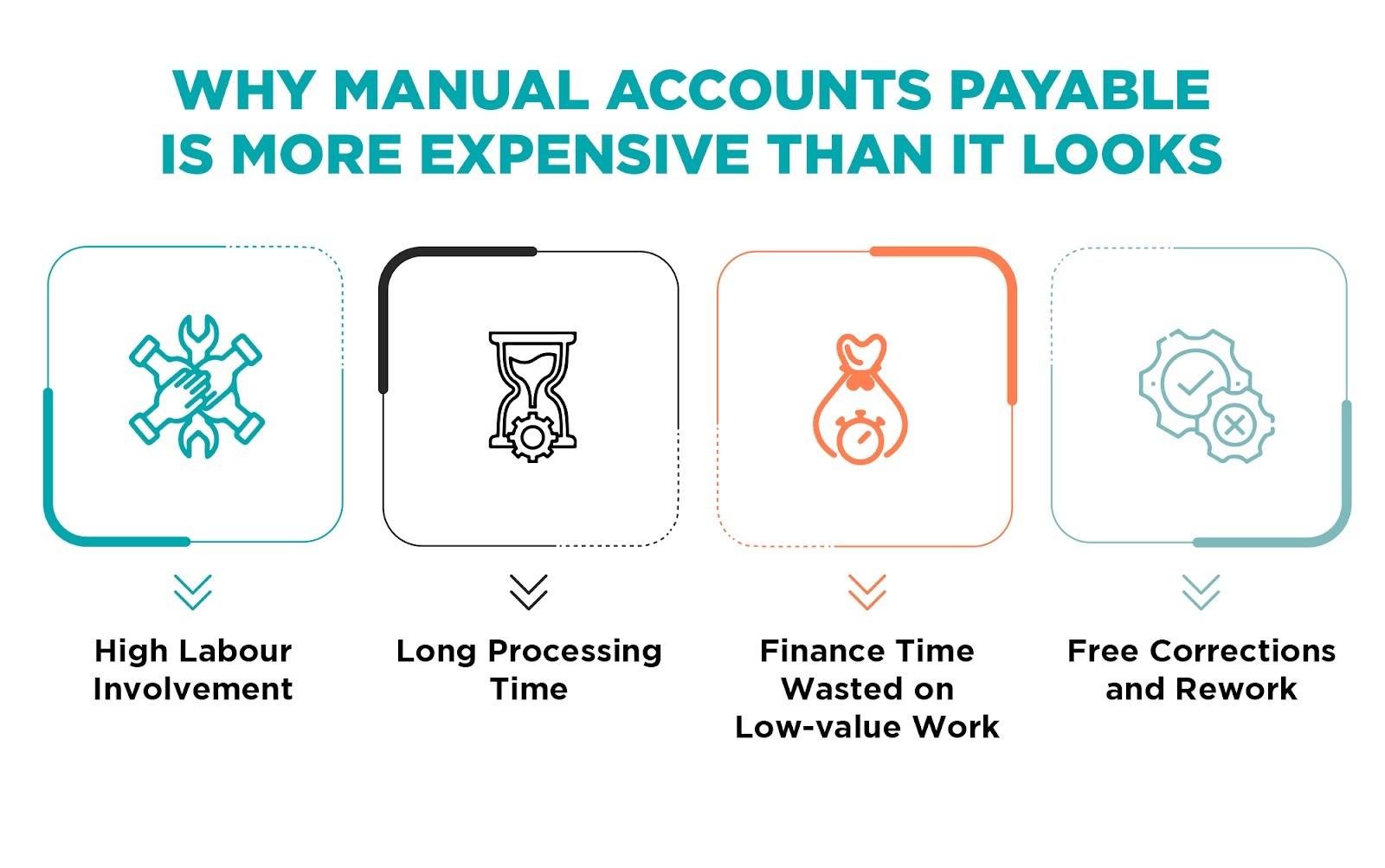
At first glance, manual AP may seem cheap since there's no software subscription. But the true cost is in the daily work and results:
Labor and Time Costs:
Manual processing requires staff to:
● Sort and open invoices from various sources
● Input data manually into the accounting system
● Chase approvals by mail or sharing drives
● Solve issues and deal with any exceptions
This process takes a significant amount of time. Industry benchmarks show that manual invoice processing can take 9 to 15 days per invoice, depending on volume and complexity.
Finance professionals typically spend between 25 percent of their time on manual AP tasks, reducing their capacity to analyze, plan, and optimize cash flow.
Secret Financial Costs for Manual AP:
1. More expensive processing costs per invoice
Although there is no fee for the software, manual AP involves high operating costs. Research suggests that the cost of processing a single invoice manually can range from $14 to $26, depending on headcount and geographic location.
It includes
● Labor for data entry● Time spent correcting errors
● Follow-ups for missing approvals
In contrast, automated processing typically costs $2-$5 per invoice, offering up to 80% savings compared to manual processes.
2. Incomplete Early-Payment Discounts
Manual AP cycles can be more time-consuming. Delays in approvals and payments can cause companies to miss out on discounts for early payment that vendors offer, which can range from 1-3% of the invoice value.
Ignoring these discounts due to inefficient processing could result in significant savings being lost over time.
3. Penalties and late fees
Delays and errors in manual workflows can expose companies to late-payment fines. Every late invoice incurs direct costs, as well as the indirect costs of lost trust in vendors.
High Quality, Risk and Financial Costs:
1. Higher Error Rates
Manual data entry isn't only slow; it's also error-prone. Industry data shows that manual AP error rates range from 1% to 5% per invoice. Even at 1 percent, this amounts to rework, delays in reconciliation, and the potential for over- or underpayments.
Automated AP solutions, in contrast, reduce the error rate of invoices by as much as 90 90% due to the use of validation and data collection rules.
2. More Complexity and Risk in Auditing
Manual workflows rely on spreadsheets, emails, and a fragmented approval process. Audit trails are difficult to recreate, which increases the time and risk of conducting reviews.
Incorrect or insufficient documentation can cause compliance issues and longer audit cycles, resulting in increased indirect costs.
Operational Drag and Organizational Impact:
1. Bottlenecks and slow approvals
Manual approval processes are usually carried out through email, which means invoices may be delayed in inboxes, lost, or incorrectly routed. This can slow down the entire vendor payment process and hinder cash flow planning.
Structured workflows help reduce invoice processing time by routing invoices directly to the appropriate approvers and providing clearly defined escalation paths.
2. Limited Financial Visibility
Manual AP provides only a limited view of the status of invoices in real-time, future cash outflows, or even exception backlogs. The result is that cash flow forecasting is more proactive than strategic.
Without dashboards, operational finance teams have to spend more time gathering data than using it to make decisions.
Strategic Costs of Opportunity Loss:
If teams are entrapped in processing and fail to plan, the business is unable to create strategic value. The actual price of manual AP becomes apparent in the following:
● Financial insights delayed● Capacity for vendor discussions
● A shorter timeframe to improve processes
● Slower scaling during growth phases
In the same way, the manual AP costs more than just money; it also limits strategic impact.
When Manual Accounts Payable Becomes Unsustainable
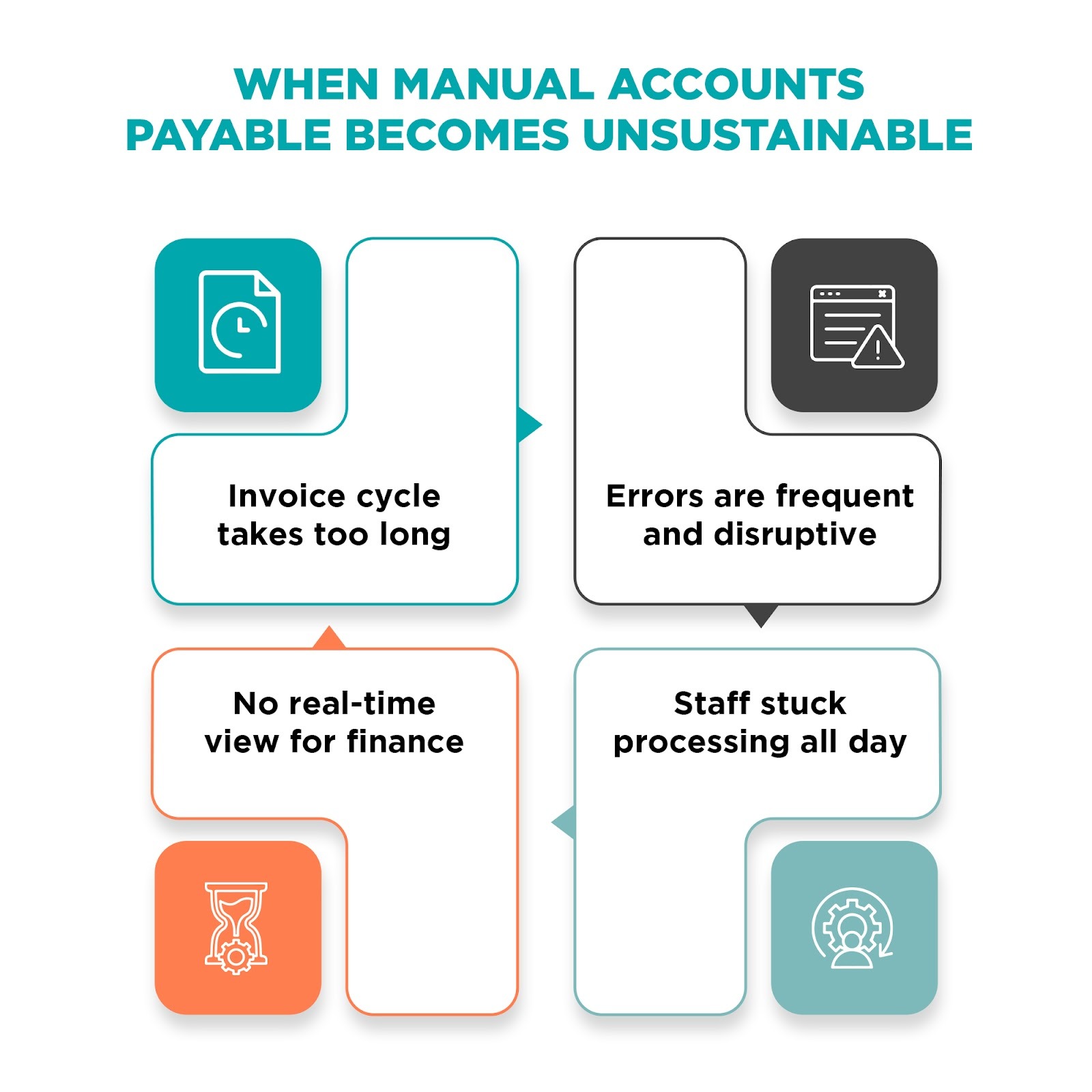
Small businesses that have a low invoicing manual AP can function well. As invoices increase, there are several points of inflexion:
● The cycle time for invoices regularly exceeds acceptable cash flow timelines.● Errors happen frequently that can impact the reconciliation process and vendor trust.
● Finance executives aren't able to access real-time information from AP
● Staff spend more time processing rather than doing value-added work
This is a clear sign of how manual AP has gone from a short-term fix to a costly operational burden.
Conclusion
The real expense of manually processing accounts payable is far more extensive than what shows on the spreadsheet. It can be seen in worker productivity losses, missed financial opportunities, increased errors, and weakened strategic capabilities.
For those in finance who prioritize accuracy, cost, and efficiency, Manual AP is a risky option that becomes more costly as you grow.
Discover Dollar can help organizations identify and eliminate cost-saving opportunities by automating accounts payable processes. By digitizing invoice entry, structuring approvals, and delivering real-time financial transparency, Discover Dollar transforms the manual AP process into a powerful lever to control financials.
When you use Discover Dollar, your finance team can:
● Reduce processing costs and cycle time● Reduce errors and increase conformity
● Enhance the visibility of cash flow and forecasting
● Let capacity be freed up for value-added work
Stop paying unnecessary AP expenses.
Learn how Discover Dollar can help streamline the accounts payable process and help you save money.